Defect of presence
Contemporary visual culture is oriented toward the ideal video frame: stabilized, controlled, and cleansed of contingency and bodily presence. Anything that points to the person behind the camera is perceived as interference and subject to elimination. Perfection is achieved at the cost of the operator’s disappearance.
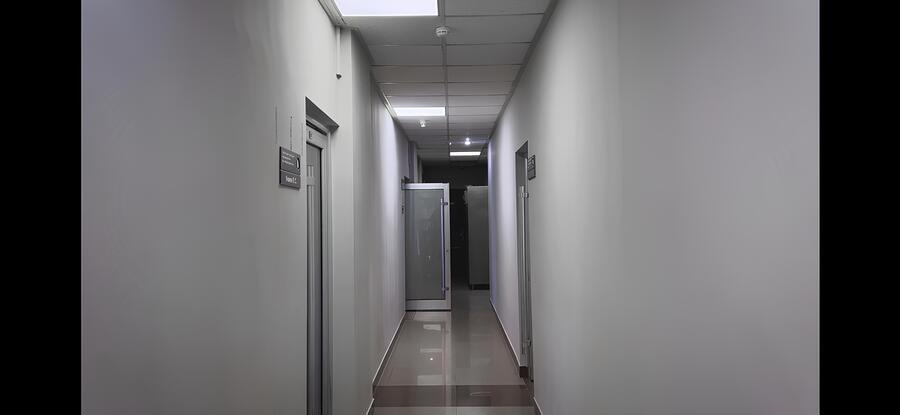
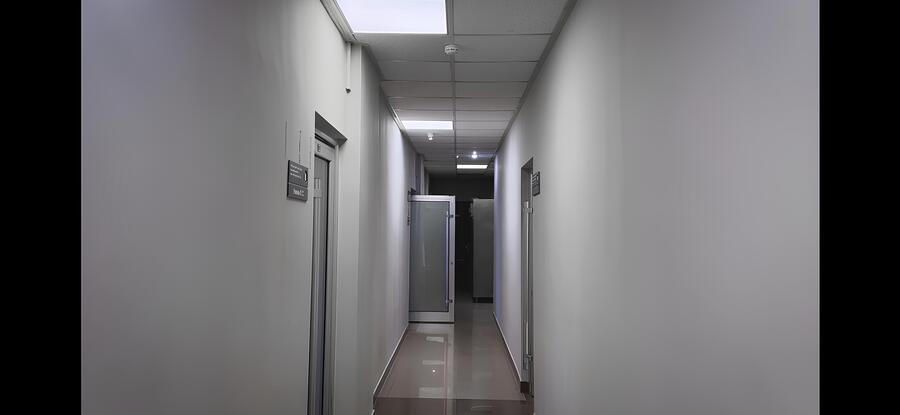
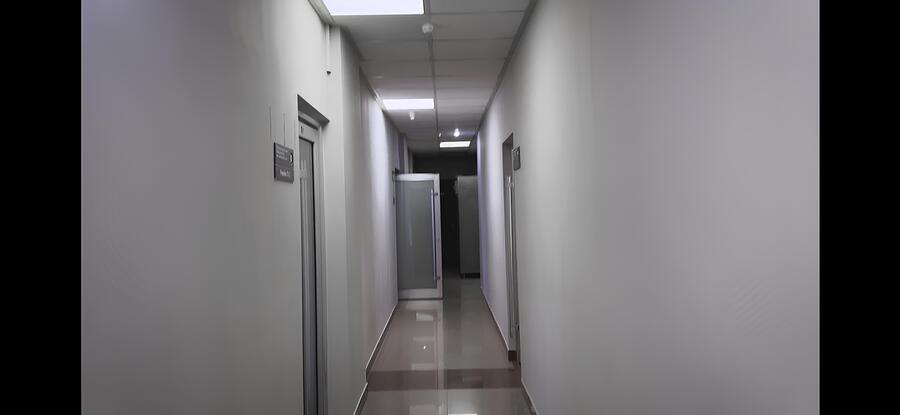
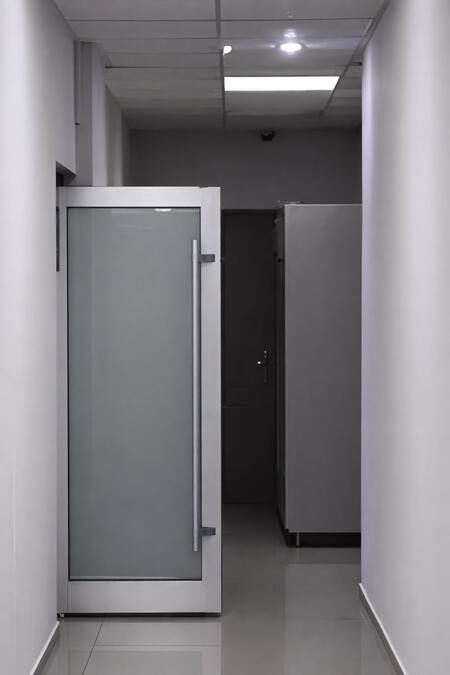
The work presents a symmetrical, calm, and visually «correct» video frame. The corridor functions as a clean, neutral, transitional space. Open and closed doors create a sense of possible directions. However, the camera follows none of them and remains fixed. Human presence is not revealed through an image, but through video as a process: micro-movements, breathing, and bodily tension.
The work is structured around holding the frame. The absence of events is a deliberate gesture that allows the viewer to share this state. The longer the video lasts, the more acutely the viewer becomes aware of their own body breathing, fatigue, and the desire to move. Gradually, the distinction between operator and viewer dissolves.
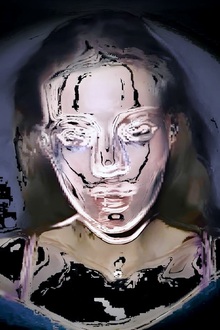
The appearance of a passing figure disrupts this mode. At the moment of external action, breathing ceases and attention fully shifts toward the event. It seems as though the passerby is the operator and that the video is approaching its logical conclusion. However, this impression proves false: the event offers no resolution, and the video continues, intensifying exhaustion and the emptiness of waiting.
This work is an attempt to demonstrate that the ideality of the video frame is not neutral. It becomes possible only through the elimination of the human who watches, breathes, and tires. By breaking the ideal frame with bodily presence, I return the figure of the operator to the video not as an image, but as a condition that cannot be fully stabilized or erased.