Behind the Curtain
Context
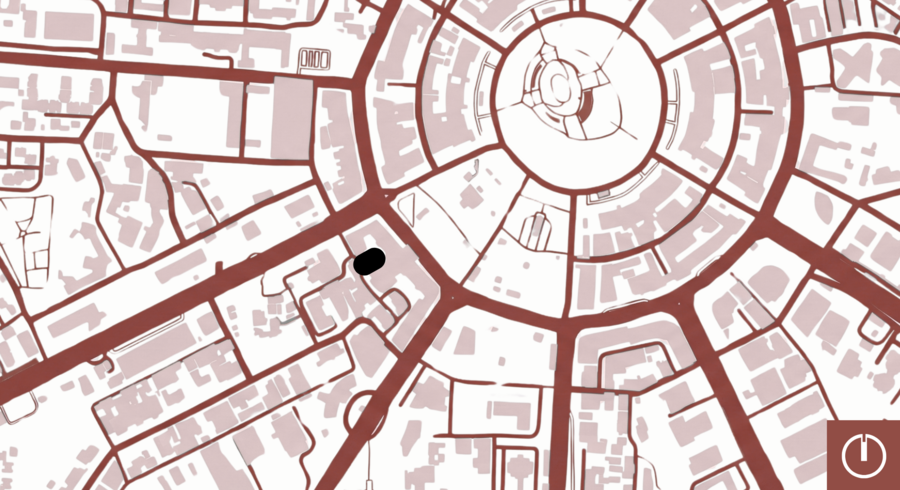
Plan of Connaught Place in New Delhi showing the site
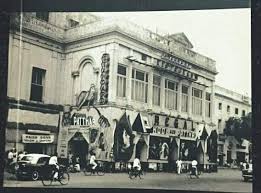
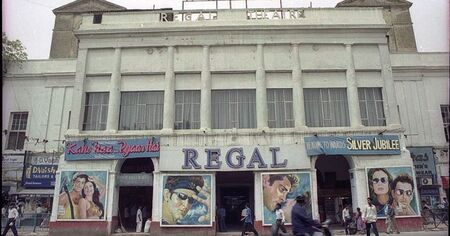
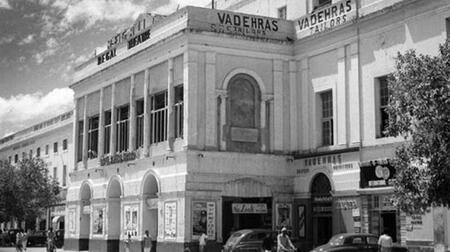
Regal Cinema, built in 1932 and designed by Walter Sykes George, stands as one of New Delhi’s earliest and most influential cinematic landmarks. Conceived as a theatre for ballets, plays, and talkies, Regal introduced a new culture of collective viewing to Connaught Place and the city at large. It hosted landmark premieres from Gone with the Wind to the films of Raj Kapoor and Nargis becoming a site where Indian and global cinema intersected. Its Georgian-Mughal architectural language, defined by rhythmic arches, symmetry, and a prominent marquee, reflects both colonial urban aspirations and the emergence of cinema as popular culture. Over time, as multiplexes rose and single-screen theatres declined, Regal’s role shifted, culminating in its closure in 2017. Yet the building remains embedded in public memory as a place of anticipation, glamour, and shared emotion.
The 'Parda'
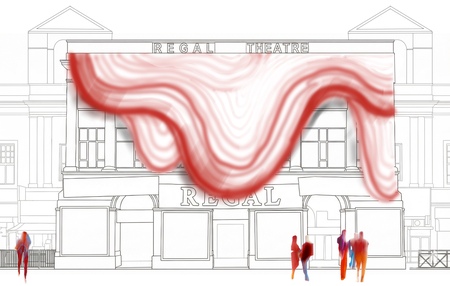
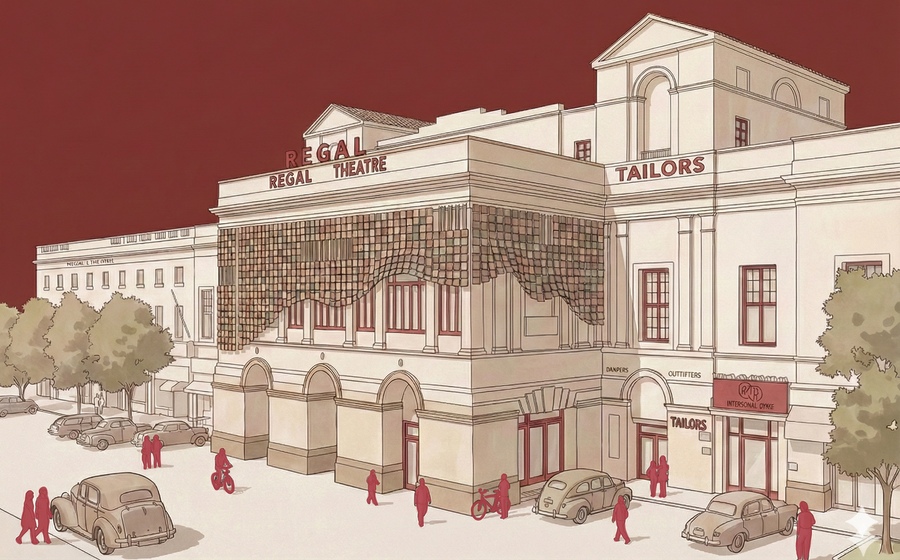
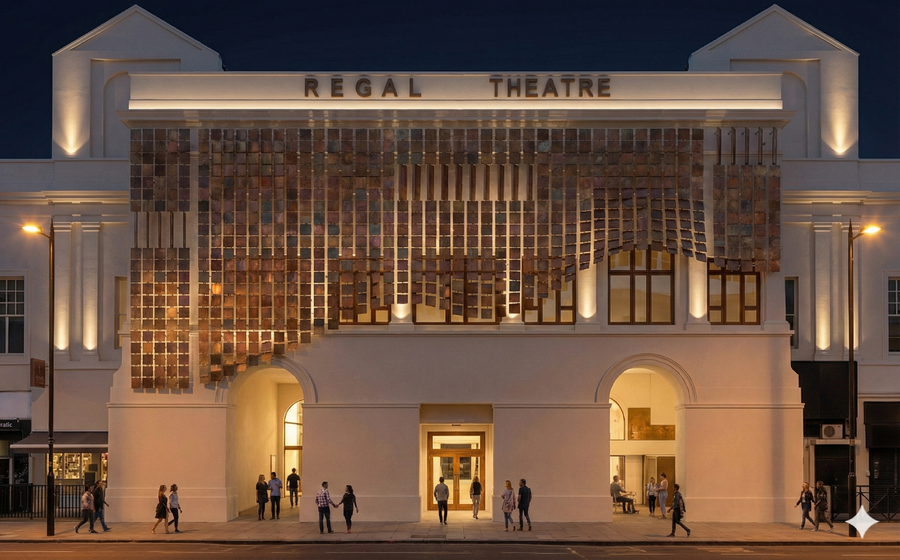
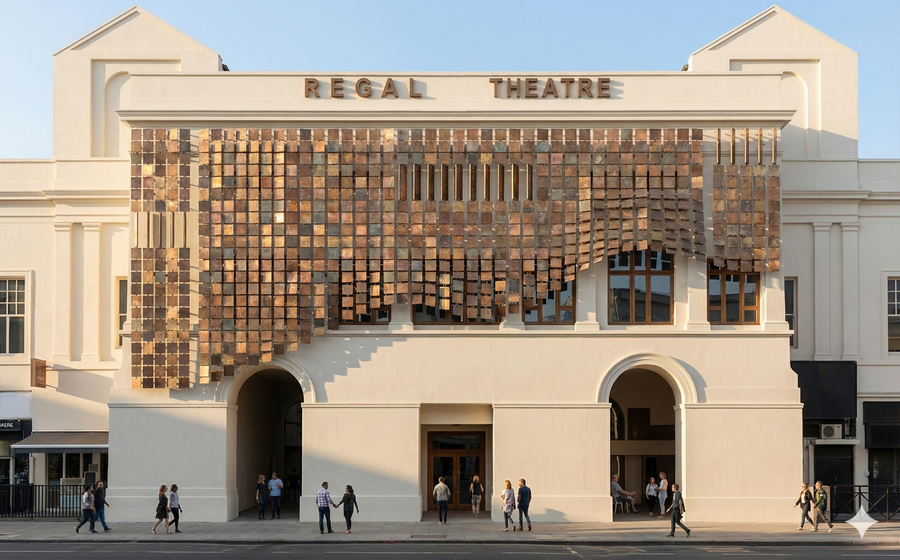
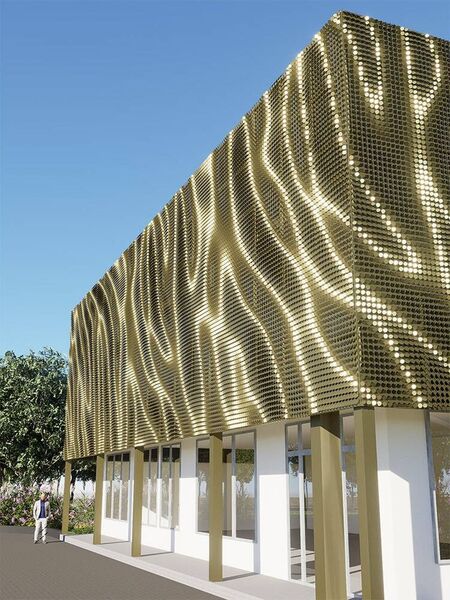
The project reimagines Regal Cinema as a Museum of Bollywood, celebrating the journey of Hindi cinema as a cultural force that shaped aspirations, identities, and everyday life across generations. Rather than presenting Bollywood as static imagery, the exhibition is conceived as an experiential archive where movement, rhythm, and atmosphere recall cinema as a lived, collective experience. The design introduces a single, architectural feature: a kinetic façade placed in front of the existing building The curtain veil is conceived as an architectural homage to Regal’s earliest life as a theatre for ballets, plays, and live performance long before cinema claimed the building as its primary identity. By partially veiling the ivory-painted historic façade, the intervention recalls the moment just before a performance begins, when the curtain hangs still and the audience waits. This deliberate act of concealment gives the project its name, Parde Ke Peechhe, behind the curtain, where rehearsals, gestures, and transformations occur out of sight. The veil occupies only a portion of the façade, allowing the original arches and proportions to remain visible and dominant, while quietly marking the zone of performance and anticipation. It suggests the backstage, the wings, and the threshold between everyday life and staged illusion. As it moves gently with air, the curtain carries echoes of dance and theatre, of bodies in motion, of ballets once staged within these walls, before extending that lineage into the era of cinema. Rather than displaying history, the veil withholds it, inviting memory and imagination to fill the gap. Regal is thus remembered not as a frozen monument, but as a place where performance has always lived, just behind the curtain.
Ideation
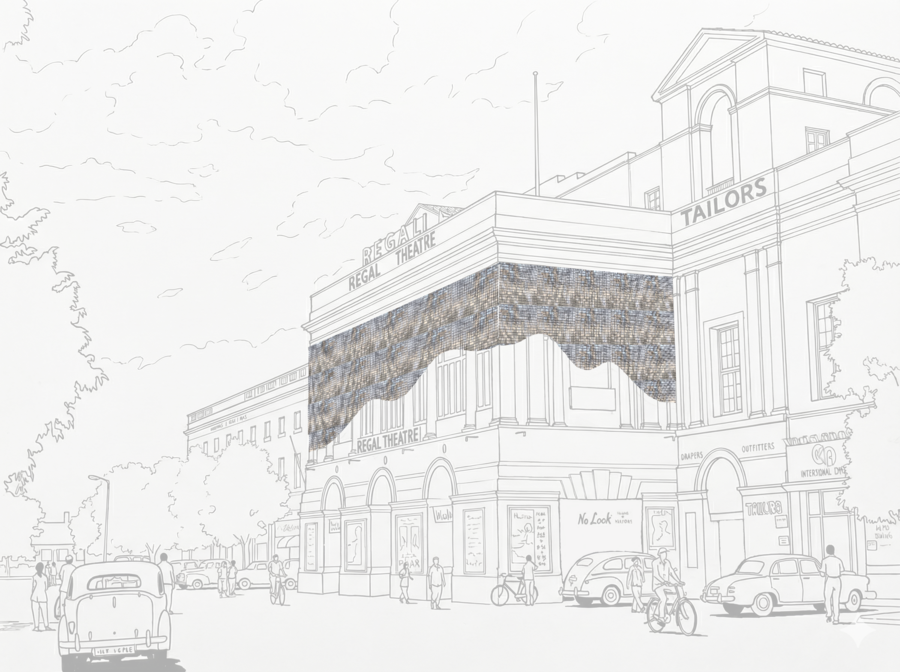
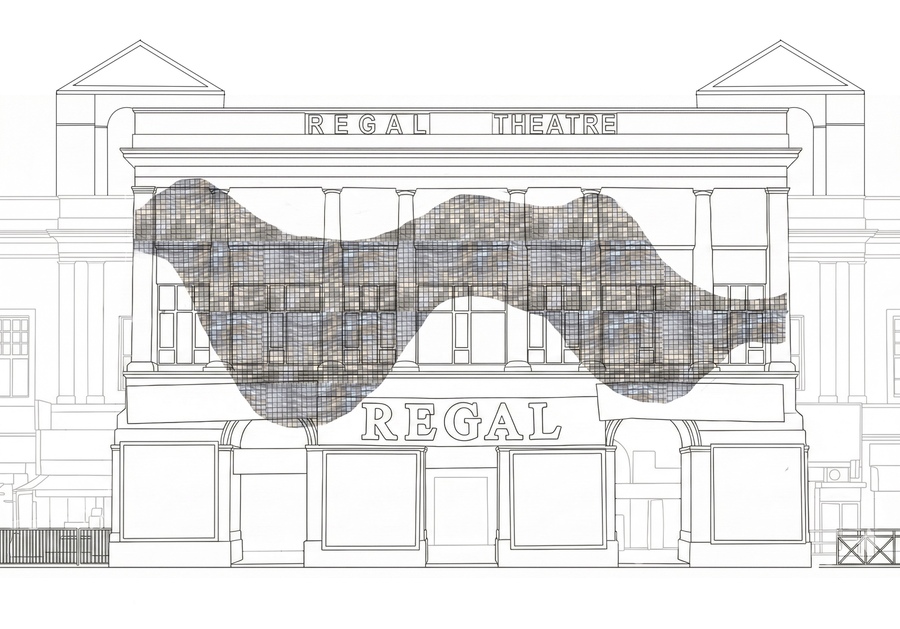
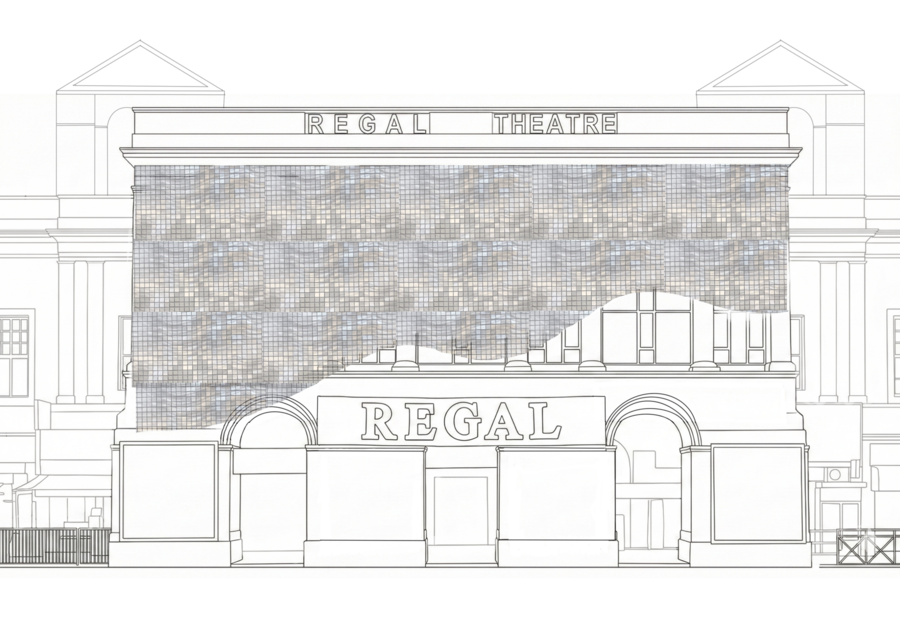
The design retains and restores the original 1932 Regal Cinema façade designed by Walter Sykes George, preserving its Georgian–Mughal architectural language, arches, symmetry, and proportions. A reversible secondary layer is introduced to frame the historic fabric rather than replace it, supporting the adaptive reuse of the building as a Museum of Bollywood. This intervention reinforces Regal’s original role as a place of anticipation, gathering, and collective experience. Environmentally, the façade functions as a passive shading device that reduces direct solar gain on the historic surface and lowers internal cooling loads through filtered daylight, while thin-film photovoltaic strips are integrated to partially power the façade lighting and kinetic systems.
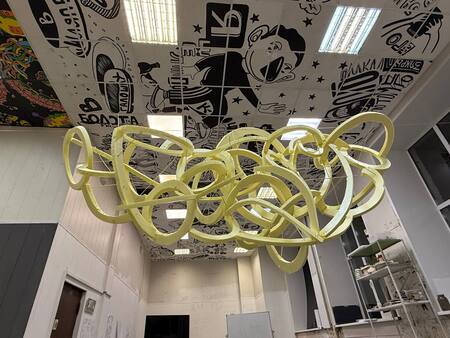
Reference image for the kinetic facade showing the size and the mechanics of the flappers.

The façade curtain is composed of small, lightweight metal modules finished in matte silver paint that respond to natural air movement, allowing wind to gently animate the surface and create the illusion of a flowing theatre curtain. (detail has not been drafted by the author)
Conceptual Renders