Enhancing the Iconic

Narrative
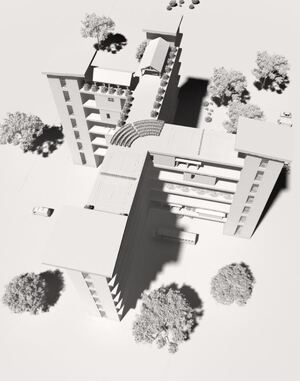
The project began by looking closely at the Sri Ram Centre for Performing Arts and understanding how people experience the building today. Its bold brutalist form gives it a strong identity, but the façade could engage more actively with openness, transitions, and filtered light, qualities that are often central to Indian architecture. This raised a simple question: how can the building keep its strong character while becoming more open, more breathable, and more connected to its surroundings? Site observations played a major role in shaping this direction. The main façade receives harsh sunlight until noon, and although the original balcony partitions help reduce glare, the entrance still feels very exposed. The building also opens directly to a busy road, leaving no comfortable area for artists, visitors, or audiences to pause and interact before or after performances. Since this is a performing arts centre, creating a shaded, semi-private hangout space felt essential for improving how people experience the building. From these observations came the idea of exploring «soft architecture» using openings, closings, partitions, shadows, and breathable materials to create a gentler relationship between the façade and the environment. This is where the idea of reinterpreting the traditional Indian jali became important. Jalis have long been used to filter light, create privacy, and allow air to move freely, and bringing this language into the project offered a way to soften the brutalist form without taking away from it. This reinterpretation focuses less on dramatic change and more on adding layers that enhance what already exists. Once the design direction was clear, AI-generated prompts were used to produce visual renderings, helping test how the façade might look with different materials, shading elements, and overall massing adjustments, which were then edited further in photo-editing softwares. The final approach aims to give the building a renewed identity that remains true to its structure while creating a more inviting, climate-responsive, and socially engaging façade.